Portable vs standby: an honest comparison
A portable generator can be the right answer for some households. For a multi-day outage it asks a lot more of you. Here is the honest comparison, including when the smaller option is enough.
Hurricane Milton, Oct 10, 2024
21,912Sumter County electric customers out, 23.0% at the Florida PSC 8:47 AM report
Or call (352) 780-1430. A licensed installer who serves your area calls back, usually within one business day.
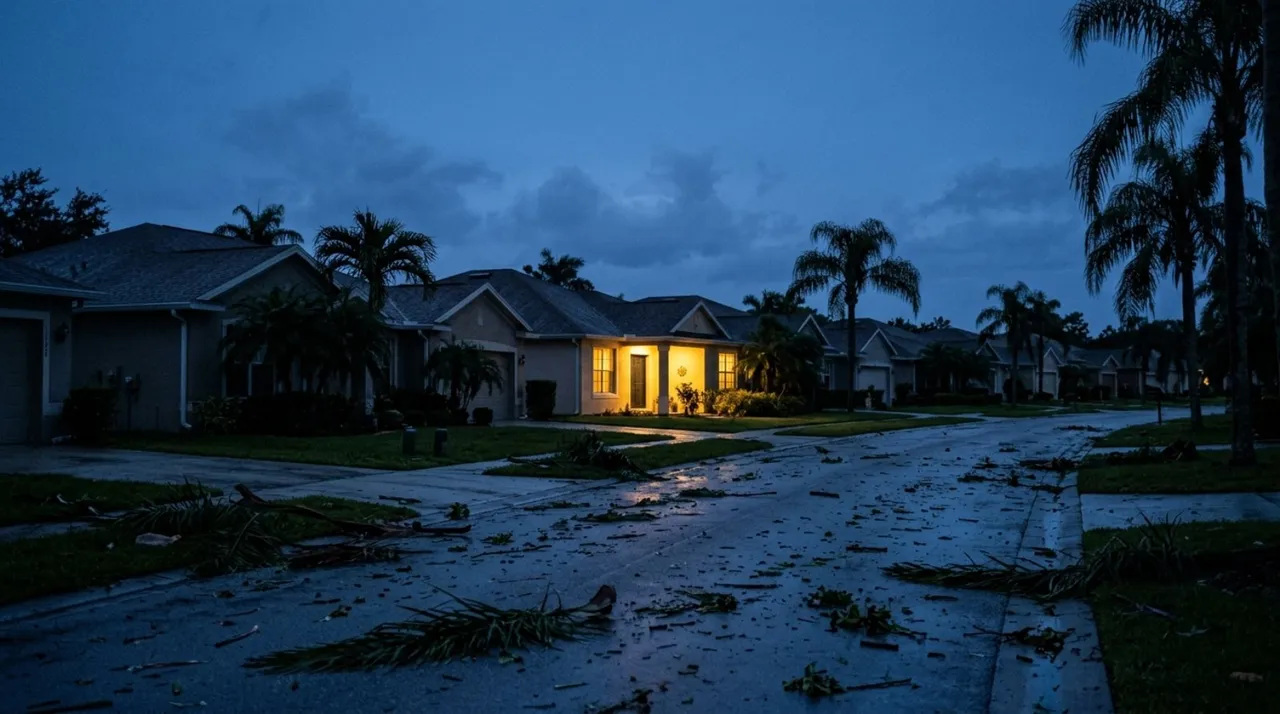
What a long outage asks of each kind
Free in-home estimate, written price, no obligation.
Get my estimateBoth portable and standby generators make electricity from an engine. The difference is everything around the engine, and that difference grows with every day an outage lasts.
A portable generator sits on wheels in the garage until it is needed. In an outage, someone rolls it outside, sets it at a safe distance, fills it with fuel, starts it, and runs cords or connects it to a properly installed inlet. Many models run on gasoline; some also run on propane cylinders. Inverter models are quieter and cleaner for electronics but usually smaller. When fuel runs low, someone refuels it, after letting it cool, day and night.
A standby generator is permanently installed on a pad outside, connected to natural gas or a propane tank and wired through an automatic transfer switch. When the grid drops, it starts and takes over on its own. It runs through the night without anyone going outside. Its daily task in a long outage is a 30-minute pause after every 24 hours of running so the owner can check the oil, as Generac's continuous-use guidance describes.
For a two-hour summer outage, either works, and a portable may be the sensible buy. For a four-day outage like Milton's locally, or Irma's ten days statewide, the portable's demands add up: fuel trips, refueling in the dark, keeping exhaust away from the house, and someone physically able to do all of it.
That last point matters in The Villages. Many residents live alone, some are seasonal, and many would rather not wrestle a 200-pound machine or carry fuel cans in September heat. Neither choice is wrong. It depends on who will be home, and what must keep running.
Write down who will run the generator if the outage lasts a week
Fuel handling: the daily chore of a portable
A portable generator's fuel tank is small by design, so it needs refilling often. In a long outage that becomes the main job of the household, and fuel itself can be scarce.
Florida's storm record shows how scarce. GasBuddy data showed about 43 percent of Florida gas stations out of fuel on the morning of September 12, 2017, after Irma, and about 60 percent in the Gainesville area. The EIA notes Florida has no refineries and no major pipelines from Gulf Coast supply, so it depends on marine shipments through its ports. After Milton in 2024, the EIA reported hundreds of Florida retail stations without fuel, and nearly half the state's petroleum supply arrives through Port Tampa Bay.
So a portable plan has to include stored fuel, and stored gasoline brings its own rules:
- Store it only in approved containers, away from the house and any flame, following the generator maker's guidance.
- Let the generator cool before refueling. Ready.gov lists this among its generator safety steps.
- Plan the amount honestly. A portable running around the clock may need several refills a day.
A standby generator avoids this chore. On natural gas, the fuel arrives through the utility line, and Peoples Gas says fewer than 1 percent of its customers had a gas interruption in the 2024 storms, by its own count. On propane, the tank holds days rather than hours of fuel, though the district ARC manuals cap an above-ground tank at 120 gallons, which runs a 26 kW unit about 1.9 days at half load. Either way, no one carries fuel in a storm.
The fuel math for both standby fuels, including refill plans for propane homes, is on generator fuel runtime.
Carbon monoxide: the risk that makes the choice
The most important difference between portable and standby generators is not power or price. It is carbon monoxide.
The CDC says more than 400 Americans die each year from unintentional non-fire carbon monoxide poisoning, more than 100,000 visit an emergency room, and more than 14,000 are hospitalized. The Consumer Product Safety Commission links about 92 of the more than 200 consumer-product CO deaths each year to portable generators.
Florida has its own hard data. After the four hurricanes of 2004, CDC investigators counted 167 nonfatal CO poisonings in 51 incidents at 10 hospitals, and 6 deaths. Portable gasoline generators caused 96 percent of the nonfatal incidents with a known source, and all of the fatal ones. Even generators placed outdoors poisoned people when they sat near windows or window air conditioners: that was 34 percent of incidents.
The official guidance is consistent:
- Run a portable generator only outdoors, at least 20 feet from windows, doors and attached garages (Ready.gov, CPSC), with the exhaust pointed away. The CDC says more than 20 feet from windows, doors and vents.
- Never run one inside a home or garage, even with the doors open.
- Install battery or battery-backup CO alarms on every level of the home.
On many Villages lots, especially courtyard and patio villas, finding a spot 20 feet from every window and door, out of the rain, and not near a neighbor's windows is genuinely hard.
A standby unit is professionally installed in a fixed spot, with clearances set by the manufacturer's installation manual and local code, and the district ARC rules require exhaust directed away from neighboring properties. That does not remove the need for CO alarms, but it removes the human decisions that cause most generator CO cases.
Put battery-backup CO alarms on every level, whatever you choose
After Milton, Lake County outages took about four days to clear from a 54.35% peak, per the Florida PSC: four days of refueling a portable by hand, around the clock.
ARC rules, connections and noise
The Villages adds local rules to the comparison.
ARC review. The district ARC manuals checked, including District 1, District 8, District 11 and CDD No. 4, require an ARC application for generators permanently affixed to the property and dwelling. A standby unit goes through that review: rear or side placement, at least 2 feet from property lines, not visible from the street, screening no taller than the unit, and exhaust directed away from neighbors, with approval before work starts. The manuals' application requirement covers permanently affixed units, so a portable stored in the garage does not go through it, though any permanent inlet, pad or exterior change can. Ask the district ARC office about your plan.
Connecting a portable safely. Running extension cords through a doorway works for a few appliances. Connecting a portable to the home's wiring requires a proper inlet and transfer device installed by a licensed electrician under a permit. Never plug a generator into a wall outlet. A standby unit comes with its transfer switch, installed and inspected.
Noise. Noise is one of the most common resident concerns about generators. A standby unit runs briefly for its scheduled exercise, 5 minutes every other week by default on a Generac and a 20-minute weekly run on a Kohler, plus whenever the power is out. Many owners schedule the exercise for a mid-morning weekday. A portable is often louder up close and runs wherever it can be placed safely, which may be closer to a neighbor. Specific sound levels vary by model and distance, so compare the published figures for the units you are considering. See generator noise in The Villages.
The full approval path is on ARC approval, and the permit offices are on generator permits.
Ask your installer which ARC and permit steps apply to your plan
When a portable or inverter is enough
A standby generator is not the right answer for everyone, and it is fair to say so plainly. A portable or inverter generator can be enough when most of these are true:
- Your main concern is short outages. Outside major storms, EIA data shows Florida customers average about 65 to 80 minutes of outages a year. A portable bridges that easily.
- You need essentials, not the whole house. A refrigerator, a few lights, phone chargers, a fan, a CPAP. Most portables cannot run central air, so a household that relies on AC for health reasons should weigh that carefully.
- Someone able-bodied will be home to move it, fuel it, refuel it after it cools, and keep it 20 feet from the house in all weather.
- You have a safe spot that meets the 20-foot guidance and stays clear of neighbors' windows.
- You can store fuel safely for several days, since stations may be closed or dry after a storm.
For medical equipment specifically, the CDC's Prepare Your Health guidance suggests identifying backup power, including a generator with at least 20 feet of outdoor-rated extension cord and enough fuel, plus car chargers and power banks. For a concentrator drawing about 350 watts, a small inverter can do that job between storms.
A battery is another option for short outages, quiet and without fumes. Its limits for a long outage are covered on generator vs battery backup.
If you lean toward a portable, buy it before the season, run it once, store fuel properly, and buy the CO alarms the same day. If you lean toward standby, the is it worth it page covers who benefits most.
Side by side for a week-long outage
Here is how the two compare over the kind of outage this guide plans for, about a week.
- Starting. Portable: someone sets it up and starts it, in whatever weather follows the storm. Standby: starts and transfers on its own.
- Fuel. Portable: refueled by hand, often several times a day, from stored or purchased fuel. Standby: piped natural gas, or a propane tank that holds days of fuel, with a refill plan.
- Carbon monoxide. Portable: the leading source of generator CO deaths, per the CPSC, and the cause of all fatal 2004 Florida storm cases with a known source. Standby: fixed placement set by the installation manual, local code and ARC exhaust rules.
- Cooling. Portable: usually fans and a window or portable AC at most. Standby: can be sized for central air with load management. See keeping the AC running.
- Medical equipment. Portable: works if someone keeps it fueled. Standby: runs without anyone touching it. See backup power for medical equipment.
- Maintenance in a long run. Both need oil. Standby units have a clear routine: a 30-minute pause after every 24 hours and changes on the hour schedule. See maintenance in long outages.
- Approvals. Portable stored in the garage: typically none from the ARC, but a permanent inlet needs a licensed electrician and permit. Standby: ARC application and permit, which your installer prepares.
- Cost. A portable costs far less up front. A standby system costs more; typical ranges are on whole-home generator cost.
The honest summary: a portable is a fine tool for short outages and able-bodied households. A standby unit is the tool for a household that wants to keep running for days without anyone going outside. A free in-home estimate tells you which fits your home, with no obligation to buy.
Request a free estimate and get a straight answer for your home
Straight answers
Free in-home estimate, written price, no obligation.
Get my estimateIs a portable generator enough for a hurricane outage in The Villages?
It can be for essentials if someone able-bodied is home to fuel it, refuel it after it cools and keep it at least 20 feet from the house. Milton's local outages lasted about four days, which means many refills. Most portables cannot run central air, so households that rely on cooling for health usually choose standby.
How far from the house should a portable generator be?
Ready.gov and the CPSC say at least 20 feet from windows, doors and attached garages, with the exhaust pointed away. The CDC says more than 20 feet from windows, doors and vents. Never run one inside a home or garage, even with doors open, and install battery-backup carbon monoxide alarms on every level.
Are standby generators safer than portable generators?
For carbon monoxide, generally yes. The CPSC links about 92 CO deaths a year to portable generators, and CDC found portable gasoline generators caused all fatal 2004 Florida storm CO cases with a known source. A standby unit is installed in a fixed spot to manufacturer and code clearances. CO alarms are still wise with either.
Do I need ARC approval for a portable generator in The Villages?
The district ARC manuals checked require an application for generators permanently affixed to the property and dwelling, so a portable stored in the garage does not go through that review. A permanent inlet, pad or other exterior change can need approval, and connecting to home wiring needs a licensed electrician and permit. Ask the district ARC office.
Can a portable generator run central air conditioning?
Usually not. A central AC compressor needs a large starting surge; Goodman lists a 3-ton unit at about 20.0 kVA at the instant of starting. Most portables are not built for that or for connection to the AC circuit. A standby generator with load management is the usual way to keep central air running.
Is gasoline hard to get after a hurricane in Florida?
It can be. GasBuddy data showed about 43 percent of Florida gas stations out of fuel on September 12, 2017, after Irma, and the EIA reported hundreds of stations without fuel after Milton. Florida has no refineries and depends on fuel shipped through its ports. Store fuel safely before the season if you rely on a portable.