Is a whole-home generator worth it here?
For some Villages households, a standby generator is the best money they ever spent. For others, a portable unit or a battery is enough. Here is how to tell which one you are.
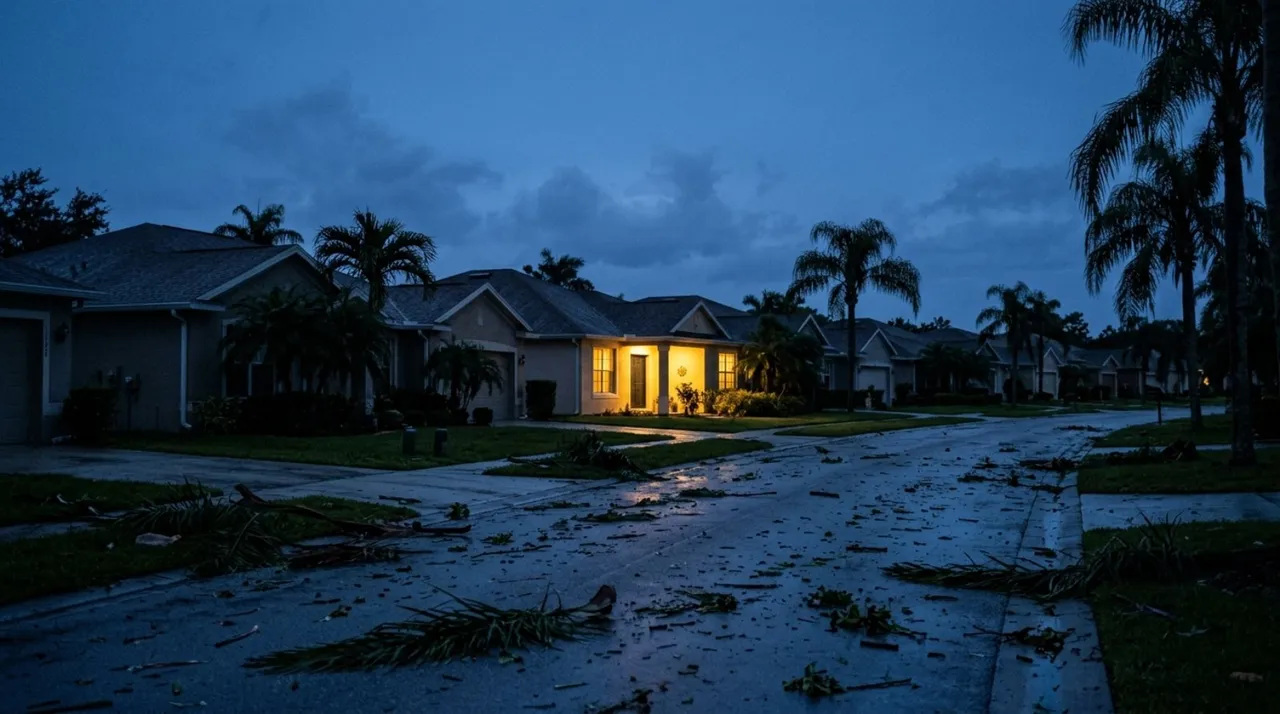
Hurricane Milton, Oct 10, 2024
21,912Sumter County electric customers out, 23.0% at the Florida PSC 8:47 AM report
Or call (352) 780-1430. A licensed installer who serves your area calls back, usually within one business day.
The forum is right about everyday outages
Free in-home estimate, written price, no obligation.
Get my estimateRead the generator threads on Talk of The Villages and one point comes up again and again: the lines here are underground, so outages are rare and short. A June 2024 thread on home standby generators makes that case, and plenty of residents agree.
The federal numbers back them up on everyday outages. The U.S. Energy Information Administration's reliability table shows Florida customers averaged about 65 to 77 minutes of outage a year outside of major events from 2017 to 2025. That is roughly an hour a year. If that were the whole story, a standby generator would be hard to justify for most homes.
It is not the whole story. The same table shows what major events do to the average. Florida customers averaged about 2,693 minutes of outage in 2017, the Irma year, about 45 hours, and about 1,488 minutes in 2024, the Helene and Milton year, about 25 hours. EIA also reported that U.S. customers averaged about 11 hours of interruptions in 2024, with major events causing 80% of those hours.
So both sides are right. Day to day, power in The Villages is very reliable. In a bad storm year, it is not, and those outages are long. A generator is not for the thunderstorm that flickers the lights. It is for the few days a decade when a hurricane takes the grid down and the house gets hot.
The real question is not "how often does the power go out?" It is "what happens in my home if it stays out for four days in the heat?"
The long outages come with storms
Here is the local record from the Florida Public Service Commission's outage reports.
- Irma, 2017. At the peak, 28,598 Sumter County accounts were out, 38.9% of the county, along with 69.7% of Lake County and 75.9% of Marion County, per the PSC's 2018 hurricane review. Statewide, outages took about ten days to fall below 1%.
- Milton, 2024. At the 8:47 AM report on Oct. 10, 21,912 of 95,259 Sumter County accounts were out (23.0%), and 54.35% of Lake County, per the PSC report. Sumter County reached zero by the evening of Oct. 14, about four days later.
- Helene, 2024. Much smaller here: 1.87% of Sumter County at its peak, cleared within about two days.
- Ian, 2022. Sumter County peaked at 5.22% and was cleared the next day.
Underground lines on your street do not stop a storm from knocking out the system that feeds them. The records show Villages-area counties losing power widely in Irma and Milton anyway.
Four days is the typical bad case in the recent local record. Elsewhere in Florida it has been much longer: Bay County was still 53% out a week after Hurricane Michael in 2018, per PSC reports. We are not predicting that here. We are saying a sensible plan covers days, not hours.
A whole-home generator turns those days into an ordinary week at home. Our hurricane backup page and Florida grid page go deeper on the record.
Who a generator is clearly worth it for
For some households, the answer is yes, and it is not close.
- Anyone on powered medical equipment. HHS emPOWER data for October 2026 counts 2,478 Medicare beneficiaries in Sumter County who rely on power-dependent equipment, 577 of them on oxygen. A CDC study found most oxygen concentrators run about 3 to 4 hours on battery at low settings. And SECO Energy's Medically Necessary Service page says those accounts are not prioritized during named-storm restoration, when shelters, hospitals and government facilities come first. See our medical backup page.
- Heat-sensitive residents. The CDC says people 65 and older are more prone to heat illness, often take medicines that affect temperature control, and should not rely on a fan as their main cooling in very hot weather. A generator that runs the air conditioner is the difference. Our AC page explains sizing.
- People who want to stay home. The Florida Special Needs Registry says registering does not guarantee a shelter space or help, and tells registrants to plan to be self-sufficient for at least 72 hours. Many residents would rather ride out a storm in their own home than in a shelter or a hotel two hours away. A generator makes that a safe choice.
- Insulin and refrigerated medicine. Ready.gov says to discard refrigerated medicine after an outage of more than a day unless the label says otherwise.
If any of these describes your household, the question is not whether a backup plan is worth it. It is which plan fits your home, your fuel and your budget. A licensed installer can price that at no cost.
After Milton, Sumter County went from 21,912 accounts without power on the morning of Oct. 10, 2024 to zero on the evening of Oct. 14 in Florida PSC reports, about four days.
Seasonal owners and the full freezer
Seasonal owners face a different version of the question. If you leave for the summer, you are often away during the busiest part of hurricane season, and nobody is home to empty the fridge when the power goes out.
The FDA says a closed refrigerator keeps food cold about 4 hours, a full freezer about 48 hours, and a half-full one about 24. A four-day outage outlasts both. Coming home to a spoiled freezer is unpleasant and costly. Coming home to a house that sat closed and unconditioned for days in Florida summer can be worse.
A standby generator helps a seasonal home in a few ways:
- It starts on its own. The automatic transfer switch senses the outage and starts the generator with nobody home.
- It reports in. Generac's spec sheet says its Mobile Link connectivity is free with select Guardian Series units, so you can check status from wherever you spend the summer. Kohler offers OnCue Plus monitoring.
- It tests itself. The unit exercises on a schedule, weekly, every other week or monthly on Generac, so problems show up before a storm does.
Two cautions. A generator that runs while you are away needs fuel and oil like any other, so a propane home should start the season with a full tank, and someone local should be able to check on it after a long run. And for some seasonal owners, a home watch service plus a plan to empty the freezer before leaving costs less than a generator. Weigh both honestly.
Who may not need a whole-home generator
An honest page has to say this: some Villages households do not need a standby generator.
You may be fine without one if you are healthy, comfortable leaving for a few days when a big storm is forecast, have no powered medical equipment or refrigerated medicine, and can live with a warm house and an empty fridge once or twice a decade. Many residents fit that description.
Two smaller options may suit you better:
- A portable generator. Forum posters often mention inverter portables at a fraction of the cost. They run a fridge, lights, fans and phone chargers, but they need gasoline, extension cords and someone to set them up. The CDC says to run them outdoors more than 20 feet from windows, doors and vents, never in a garage, and to use battery-backup CO alarms. The ARC manuals require an application only for permanently affixed generators. See our portable vs. standby comparison.
- A home battery. A Tesla Powerwall 3 stores 13.5 kWh per its datasheet. Running only a fridge and an oxygen concentrator, about 1.1 kW, that lasts about 12 hours without solar recharge. Batteries are quiet and need no fuel, but they suit short outages or essentials, not four days of air conditioning. See our generator vs. battery page.
There is no shame in the smaller answer. An installer worth working with will tell you when a standby unit is more than you need. That honesty is a good sign about everything else they tell you.
Weighing the cost honestly
A whole-home generator is a real expense. The PowerOutage.us cost guide puts a typical installed whole-home generator at about $7,000 to $15,000. Residents on Talk of The Villages reported quotes of $9,000 to $19,000 in a 2022 thread, and estimates of $10,000 to $20,000 in a 2024 thread. Your price depends on size, fuel, distance from the panel and meter, and the transfer switch. Those are published ranges and anecdotes, not quotes.
Some honest factors on each side:
- Fuel limits. On propane, the ARC manuals cap an above-ground tank at 120 gallons, about two days of runtime on a 26 kW unit at half load. Natural gas, where available, removes that limit. See the propane page.
- Upkeep. Generators need oil, filters, a battery and periodic service. Generac's owner manual lists routine service every 2 years or 200 hours.
- What it protects. Medical safety, comfort in the heat, the contents of the fridge and freezer, and the choice to stay in your own home.
- What it costs to do nothing. For a healthy household, perhaps a few uncomfortable days. For a household on oxygen, much more.
The way to decide is with real numbers for your home. A free in-home estimate from a licensed local installer gives you the size, the fuel plan, the runtime and the price, in writing, with no obligation. Then you can weigh it against a portable or battery plan with the facts in front of you. Our cost guide explains what moves a quote up or down.
Straight answers
Free in-home estimate, written price, no obligation.
Get my estimateIs a whole-home generator worth it in The Villages if the lines are underground?
It depends on your household. Everyday outages are rare: EIA data shows Florida averaging about an hour a year outside major events. But storms still cause long outages here. Irma put 38.9% of Sumter County out at its peak, and Milton outages took about four days to clear. For medical or heat-sensitive households, that is the case for a generator.
How long do power outages last in The Villages?
Most are short. In major storms they last days. After Milton in October 2024, Sumter County outages fell from 21,912 accounts on Oct. 10 to zero by the evening of Oct. 14 in Florida PSC reports. After Irma in 2017, statewide outages took about ten days to fall below 1%.
Who should get a whole-home generator?
Households with powered medical equipment, such as oxygen concentrators, people who are sensitive to heat, people with refrigerated medicine, and anyone who wants to stay home through a multi-day outage. SECO Energy says medically necessary accounts are not prioritized during named-storm restoration, so a home plan matters more for those households.
Is a portable generator enough instead?
For some households, yes. A portable can run a fridge, lights and fans, but it needs fuel, cords and setup, and must run outdoors more than 20 feet from windows and doors per the CDC. It does not start itself or run central air well. If medical equipment or air conditioning must run unattended, a standby unit is the better fit.
How much does a whole-home generator cost in The Villages?
The PowerOutage.us cost guide puts a typical installed whole-home generator at about $7,000 to $15,000. Residents on Talk of The Villages reported quotes of $9,000 to $19,000 in 2022. Your price depends on size, fuel, distance to the panel and meter, and the transfer switch. A free in-home estimate gives you a written number.
Can a battery replace a generator here?
For short outages or essentials, it can. A Tesla Powerwall 3 stores 13.5 kWh, about 12 hours of a fridge and oxygen concentrator without solar recharge. For a four-day outage with air conditioning, a fueled generator or a hybrid is the more practical answer. Your installer can price both so you can compare.