Backup power for oxygen and medical needs
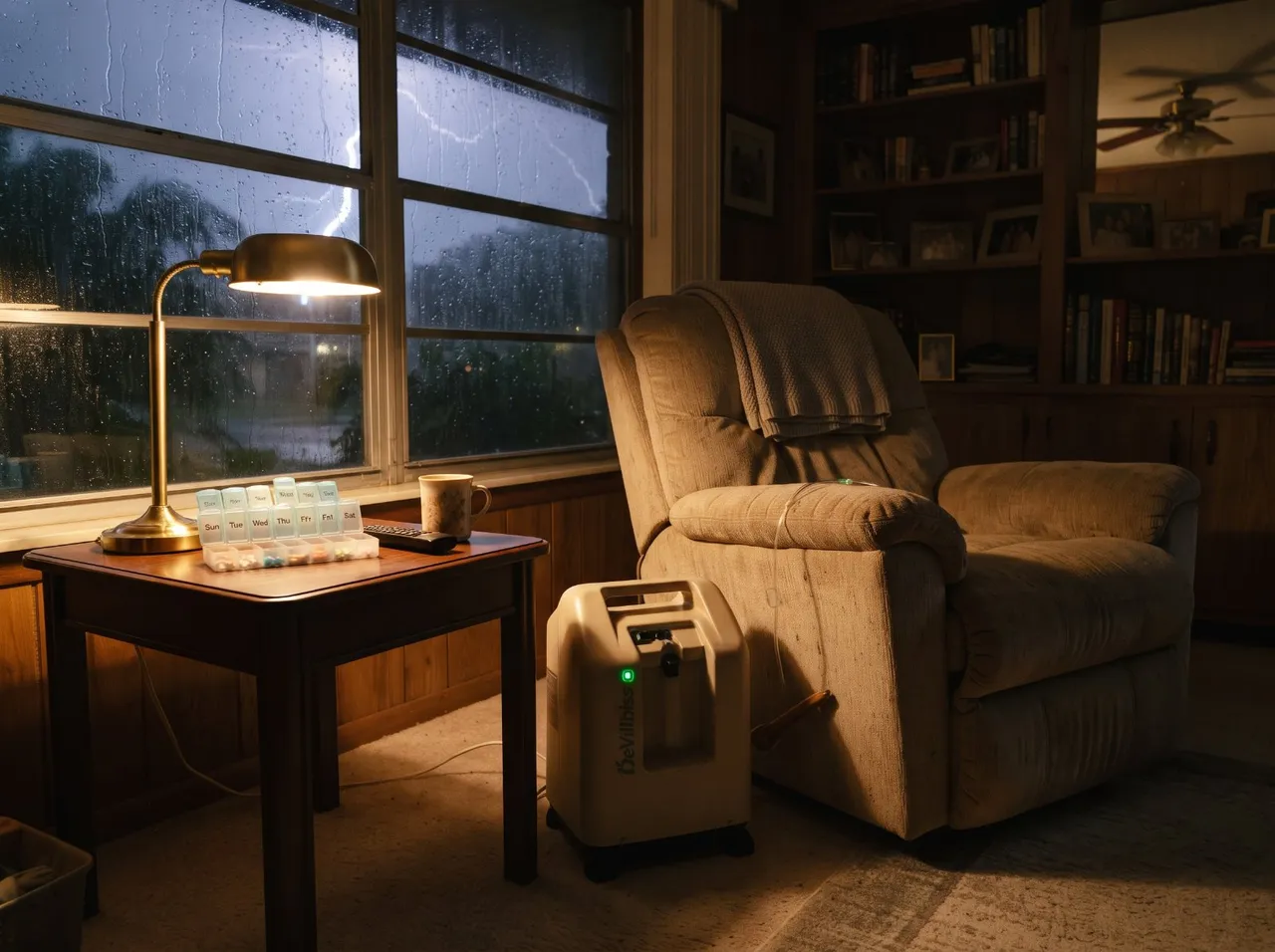
If someone at home depends on an oxygen concentrator, a CPAP or refrigerated medicine, an outage is a health question, not an inconvenience. Here is a plan that keeps care at home and does not depend on a shelter bed.
Hurricane Milton, Oct 10, 2024
21,912Sumter County electric customers out, 23.0% at the Florida PSC 8:47 AM report
Or call (352) 780-1430. A licensed installer who serves your area calls back, usually within one business day.
How many Villages neighbors rely on powered medical equipment
Free in-home estimate, written price, no obligation.
Get my estimateIf you or someone you care for uses a powered medical device, you are far from alone here. The HHS emPOWER program, run by ASPR with CMS, counts Medicare beneficiaries who live independently and rely on electricity-dependent medical equipment.
Its October 2026 data for Sumter County lists:
- 2,478 Medicare beneficiaries who rely on power-dependent devices, out of 88,380
- 577 receiving oxygen services
- 250 receiving home health care and 79 in at-home hospice
The Villages ZIP codes show a similar picture. In October 2026, 32162 counted 1,101 power-dependent device users, 32163 counted 653, and 32159 counted 643, about 2,397 in all. Those ZIP figures are approximate: they count the Medicare base, 32159 also covers parts of Lady Lake outside The Villages, and some Villages addresses use other ZIP codes. Lake County as a whole counted 5,373 and Marion County 5,482.
CDC researchers found that more than 99 percent of the home devices in their study of electricity-dependent people were oxygen concentrators, with the highest prevalence among people 65 and older and in the South. That describes The Villages well.
These numbers matter for one reason: in a widespread outage, utility crews, shelters and emergency services are serving thousands of households at once. A plan that keeps medical care running at home, without waiting for anyone, is the plan that holds up best. The rest of this page builds that plan, starting with what a battery can and cannot do. For the full household picture, see the long-term preparedness plan.
Write down every powered device and medicine in your household
Concentrator batteries buy hours, not days
Most portable and home oxygen concentrators can run on a battery for a while. The CDC paper on electricity-dependent residents found that at the lowest settings, most concentrators run about 3 to 4 hours on battery. Some models reach 6 hours, and a few reach 8 or more with an extra battery. Higher flow settings shorten runtime significantly.
Compare that with the local outage record. Milton's outages took about four days to clear in Sumter, Lake and Marion counties. Irma's statewide outages took ten days to fall below 1 percent. Even a generous battery setup covers a fraction of the first night.
Power draw, on the other hand, is modest. Philips lists its EverFlo home concentrator, a common model, at an average of 350 watts at 120 volts. That is less than a refrigerator. Any properly sized standby generator runs a concentrator easily, along with the refrigerator, lights and cooling.
A sensible layered approach:
- The generator carries the concentrator for the whole outage, starting automatically through the transfer switch.
- Charged batteries bridge the gap during the short transfer and any pause for the generator's daily oil check.
- Backup oxygen cylinders from your supplier cover the rare case where both fail. Ask your supplier how many to keep and how to store them safely.
The FDA adds two useful steps: check whether your device can run on batteries or a generator, and verify device settings once power returns, because devices often reset to defaults. If you are weighing a home battery instead of a generator, the generator vs battery page runs the numbers for a refrigerator plus a concentrator.
Time your concentrator battery at your real setting this week
Insulin, refrigerated medicine and the kitchen
Refrigerated medicine is the second medical reason to keep power on. The guidance is specific:
- Ready.gov: if an outage lasts more than a day, throw out refrigerated medicine unless the label says otherwise, and make a plan with your provider for refrigerated medicines before an emergency.
- FDA on insulin: vials or cartridges, opened or unopened, can be kept unrefrigerated between 59 F and 86 F for up to 28 days. Keep them as cool as possible, never use insulin that has frozen, and know that heat reduces its effectiveness over time.
- FDA on food: a closed refrigerator keeps food cold about 4 hours, and a full freezer holds temperature about 48 hours, or about 24 if half full.
Read the 86 F limit next to a Florida September. A home without air conditioning in late summer can easily sit above that, and the FDA rule for insulin assumes a cool place. That is why cooling, the refrigerator and medical devices belong together at the top of the generator's load list.
A short medicine checklist for the season:
- Keep a written list of every medicine, dose and prescriber, on paper.
- Ask your pharmacist or doctor about an extra supply before hurricane season.
- Know which medicines need refrigeration and what each label says about room temperature.
- Keep a small cooler and ice packs ready for a trip to a shelter or a relative's home, just in case.
When your installer visits, mention any refrigerated medicine and any second refrigerator you rely on for it. It changes which circuits stay on when load management sheds the extras. The sizing guide lets you mark those loads as must-run.
Hurricane Milton put 15.95% of SECO Energy's Sumter County accounts out on October 10, 2024, per the Florida PSC, and SECO says medically necessary accounts are not prioritized during named-storm restoration.
What SECO Energy's medically necessary program can and cannot do
Many residents assume that registering a medical need with the electric company moves their home to the front of the line after a storm. SECO Energy, which serves much of The Villages, says plainly that it does not work that way.
SECO's Medically Necessary Service flags an account for crews only when emergency storm restoration is not in effect. During named-storm restoration, shelters, hospitals and government facilities come first, and medically necessary homes are not prioritized. SECO says it cannot guarantee uninterrupted power, requires documentation from a physician, and asks customers to renew each year. Its own suggestions for these customers are to evacuate, to have a backup generator, or to use a county shelter.
In Milton, the PSC's 9 AM report on October 10, 2024 showed 15.95 percent of SECO's Sumter County accounts out, 60.48 percent in Lake and 28.90 percent in Marion. Restoration took about four days locally. For a household on oxygen, those were four days to cover without any special place in the queue.
Signing up is still worth doing. It helps between storms, when a single outage on your street can be flagged for crews. It just is not a storm plan.
Some Villages addresses are served by Duke Energy Florida instead of SECO. Ask Duke directly how its medically essential program works during storm restoration.
The FDA also recommends telling your electric company and your fire department about electricity-dependent devices. Do both, then plan as if no one can reach you quickly. A generator is the piece of the plan you control. The next section covers the county programs that back it up.
Enroll with your electric utility, then plan as if storms override it
Special needs registries: a backstop, not a guarantee
Each county that covers The Villages runs a special needs program for residents who need help in an emergency, including people who use oxygen or powered medical equipment. Register before the season. Processing can stop once an emergency begins.
- Sumter County: the program is run by the Florida Department of Health in Sumter County. Register online through the state registry or by mailing the county's paper form. FDOH reviews each application and notifies the applicant, calls registrants before an evacuation and arranges transport. The special needs shelter is at the Gloria Rowe Hayward complex in Sumterville. See the Sumter County special needs page.
- Lake County: register with the Office of Emergency Management. Shelters staffed by DOH-Lake serve people who need oxygen, uninterrupted power for medical equipment, or help with medications, but not people who need hospitalization, and a caregiver must stay with the client. See DOH-Lake.
- Marion County: the Sheriff's Office Emergency Management runs the program through a paper application, updated annually, and strongly encourages residents to shelter with family or friends first. See the Marion County program.
The state's own words set the expectation. The Florida Special Needs Registry says registering does not automatically qualify a person for a special needs shelter and is not a guarantee that officials can help in an emergency. It tells registrants to plan to be self-sufficient for at least 72 hours. The Villages District Government's emergency management page points residents to the same state registry.
So register, and also plan to need nothing from it. Seventy-two hours of self-sufficiency is the floor. Milton's local outages lasted about four days.
Register with your county's special needs program before June 1
A generator: the plan that does not depend on a shelter
Put the pieces side by side. The concentrator battery lasts hours. SECO does not prioritize medical homes during named-storm restoration. The registry is not a guarantee and asks for 72 hours of self-sufficiency. Shelters ask a caregiver to come along and cannot offer the comfort of your own bed. Local outages have lasted about four days.
A permanently installed standby generator closes that gap. It starts on its own when an outage begins, so no one has to be strong enough to pull a cord or carry fuel. It runs the concentrator, the CPAP, a powered bed, the refrigerator with the insulin, and the air conditioning, which the CDC says older adults should rely on in very hot weather rather than a fan.
A few things make a medical setup work well:
- Size for medical loads first. Tell your installer every device and its draw. A concentrator at 350 watts is small, but it has to run every hour of the outage.
- Plan the fuel. The district ARC manuals cap an above-ground propane tank at 120 gallons, which runs a 26 kW unit about 1.9 days at half load. Natural gas, a larger buried tank where the lot allows, load management or a firm refill plan carries you past that. See generator fuel runtime.
- Keep the battery charged anyway. It covers the generator's daily oil-check pause.
- Know the daily check. Someone in the home, or a neighbor, should know how to check oil. See maintenance in long outages.
The CDC also suggests caretakers check on an older person at least twice a day in hot weather. A generator does not replace that, but it makes every check easier.
One request matches you with a licensed local installer for a free in-home estimate. Tell them about the medical equipment first.
Straight answers
Free in-home estimate, written price, no obligation.
Get my estimateWill a whole-home generator run an oxygen concentrator?
Yes. A common home concentrator, the Philips EverFlo, averages about 350 watts, less than a refrigerator, so any properly sized standby generator runs one easily alongside cooling and the kitchen. Tell your installer every medical device so it is treated as a must-run load, and keep the concentrator's battery charged to cover brief pauses.
How long does an oxygen concentrator battery last in a power outage?
CDC researchers found most concentrators run about 3 to 4 hours on battery at the lowest settings, some up to 6, and a few 8 or more with an extra battery. Higher flow settings shorten that significantly. Milton's local outages lasted about four days, so batteries are a bridge, not a plan.
Does SECO Energy restore power first for medically necessary customers?
Not during named-storm restoration. SECO says its Medically Necessary Service flags an account only when emergency storm restoration is not in effect; in storms, shelters, hospitals and government facilities come first. SECO cannot guarantee uninterrupted power, requires physician documentation and annual renewal, and suggests a backup generator, evacuation or a county shelter.
How long can insulin stay out of the refrigerator during an outage?
The FDA says insulin vials or cartridges, opened or unopened, can be kept unrefrigerated between 59 F and 86 F for up to 28 days. Keep it as cool as possible, never use frozen insulin, and know heat reduces its effectiveness. A Florida home without air conditioning can exceed 86 F, so cooling matters.
Should I sign up for the special needs registry in Sumter County?
Yes, if you qualify, and before the season, since processing can stop during an emergency. The Florida Department of Health in Sumter County runs it. The state registry says registering does not guarantee a shelter space or help, and asks registrants to plan to be self-sufficient for at least 72 hours.
Do I need a big generator for medical equipment?
Not necessarily. Medical devices such as concentrators and CPAP machines draw little power. The bigger loads are usually the air conditioning and the kitchen. Your installer sizes the system around the devices that must never stop, then adds cooling and the refrigerator, using load management to keep fuel use low.