Hurricane backup power for The Villages
Four recent hurricanes show what a storm does to power in Sumter, Lake and Marion counties. Here is that record in plain numbers, and a calm plan for the next one.
Hurricane Milton, Oct 10, 2024
21,912Sumter County electric customers out, 23.0% at the Florida PSC 8:47 AM report
Or call (352) 780-1430. A licensed installer who serves your area calls back, usually within one business day.
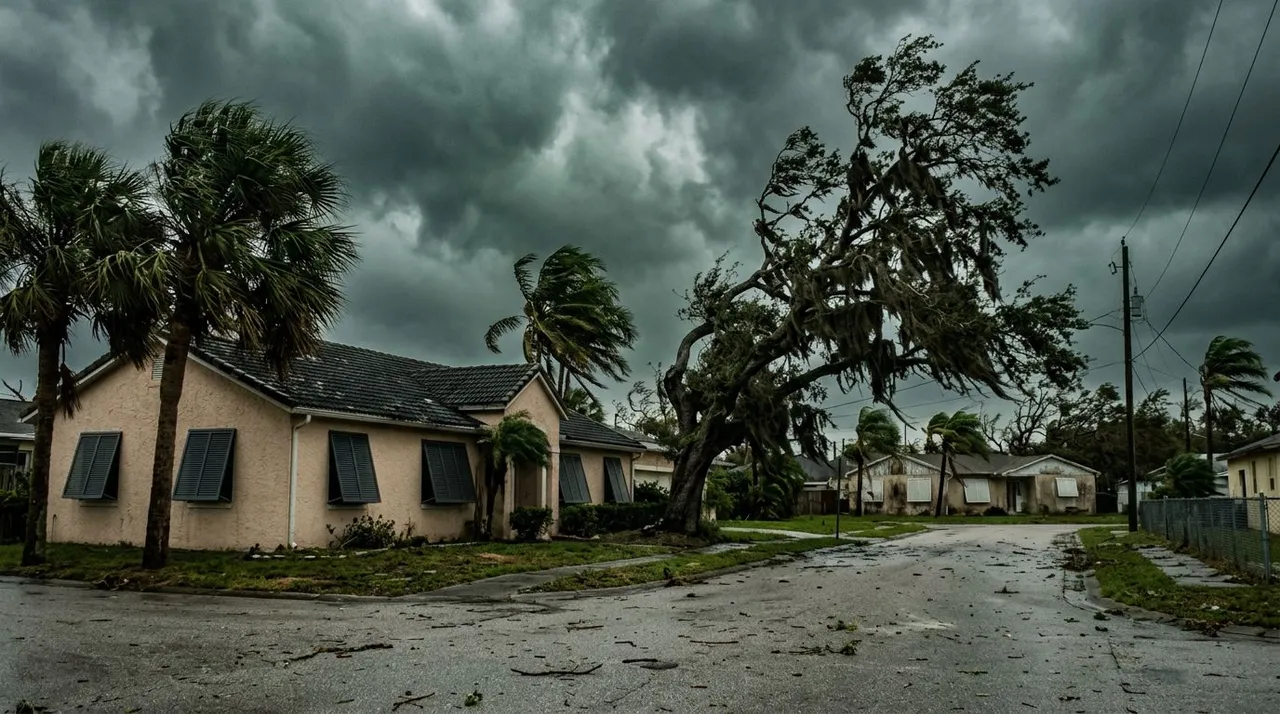
Milton, 2024: the storm most residents remember
Free in-home estimate, written price, no obligation.
Get my estimateHurricane Milton is the clearest recent picture of what a major storm does to power around The Villages. The Florida PSC tracks outages county by county, and its report at 8:47 AM on October 10, 2024 showed:
- Sumter County: 21,912 of 95,259 accounts out, 23.0 percent
- Lake County: 118,050 of 217,190 accounts out, 54.35 percent
- Marion County: 70,394 of 224,707 accounts out, 31.33 percent
By utility, SECO Energy, which serves much of The Villages, had 15.95 percent of its Sumter accounts out in that report, 60.48 percent in Lake and 28.90 percent in Marion, about 81,600 accounts across the three counties. Duke Energy Florida, which serves other parts of the area, peaked later that day at 42.20 percent of its Sumter accounts and over 50 percent in Lake. Statewide, about 3.4 million Florida accounts were out at the peak.
Restoration then moved steadily. Sumter went from 18,253 accounts out on the evening of October 10 to 5,966 on October 12, 294 on October 13 and zero on October 14. Lake and Marion followed the same curve. In all three counties, outages were near zero about four days after the peak.
Four days is the number to plan around first. It is long enough to spoil a refrigerator many times over, to push a house well past comfortable in October heat, and to drain an oxygen concentrator battery dozens of times. It is also a good test of fuel: a full 120-gallon propane tank runs a 26 kW Generac about 1.9 days at half load, so propane homes on an above-ground tank, which the district ARC manuals cap at 120 gallons, need a refill plan, a larger buried tank where the lot allows, or natural gas. See generator fuel runtime.
Ask your installer how your home would have fared through Milton
Irma, 2017: the longest local test
Irma made landfall on September 10, 2017 and hit central Florida harder than Milton did. The Florida PSC's 2018 hurricane review lists the peak outages by county:
- Marion County: 143,485 accounts, 75.9 percent
- Lake County: 123,954 accounts, 69.7 percent
- Sumter County: 28,598 accounts, 38.9 percent
Statewide, outages peaked on September 11 at 62 percent of Florida customers, more than 6.5 million. About 11 percent were still out five days later, and the statewide share fell below 1 percent only on September 20, ten days after the peak. The PSC found that vegetation, often trees outside utility rights of way, was the largest cause of outages.
Irma also strained fuel. GasBuddy data showed about 43 percent of Florida gas stations out of fuel on the morning of September 12, and about 60 percent in the Gainesville area. Florida has no refineries and depends on marine shipments through its ports, the EIA notes. For propane, the Florida Propane Gas Association said many bulk plants had no power to pump fuel out, and trucks were the only way to bring propane into the state for about seven days. The state put backup generators, emergency kitchens and critical facilities first.
Irma is the storm that shaped Florida's nursing home rules too: after air conditioning failed at one Broward County facility for three days, the state required licensed facilities to hold indoor temperatures at or below 81 F for at least 96 hours. Read more on keeping the AC running.
The lesson for a household: plan for a week, keep fuel and supplies on hand before the storm, and do not count on buying gasoline or propane in the days after.
Ian and Helene: modest here, severe elsewhere
Two more recent storms round out the local map, and both show how much depends on a storm's track.
Ian, 2022. Locally, Ian's peak on September 29 left 18.57 percent of Lake County accounts out, 5.96 percent of Marion and 5.22 percent of Sumter. Sumter was clear by September 30, and Lake reached zero by October 3, about four days after the peak. In Lee County, where Ian came ashore, the story was very different: about 89 percent of accounts lost power, including over 95 percent of Lee County Electric Cooperative members, and 1.52 percent were still out almost four weeks later.
Helene, 2024. Helene's local outages were smaller still. Marion peaked at 20.36 percent, Lake at 3.43 and Sumter at 1.87, and PSC reports show all three counties cleared within about two days. In western North Carolina, Helene's damage was severe. North Carolina's electric cooperatives peaked at 236,000 outages on September 27, 2024, and about 11,500 members, the hardest to reach, were still out on October 11, roughly two weeks later. Duke Energy told Carolinas customers to prepare for multiday outages, noting damage assessment alone can take 24 hours or more.
Further back, Hurricane Michael in 2018 left Panhandle counties such as Calhoun and Jackson almost entirely dark, and the last of them reached zero about 26 days later.
These multi-week cases happened in other places, under other conditions. They are lessons in how damage can stack up when roads, poles and substations are all hit at once, not forecasts for The Villages. The calm takeaway is a plan that covers a week comfortably and has a path to stretch further: natural gas or a refill plan, oil and filters, water and food. The long-term preparedness plan lays it out step by step.
Build a plan that covers a week with a path to stretch further
At Hurricane Irma's 2017 peak, 75.9% of Marion County accounts, 69.7% of Lake and 38.9% of Sumter were without power, per the Florida PSC's 2018 review.
Before the storm: the week a hurricane is forecast
If a generator is already installed, the days before a storm are short and calm. Here is a checklist that works for most Villages homes.
- Top off propane. Call your supplier as soon as a storm is in the forecast cone. Tanks fill to about 80 percent, and starting full is the cheapest runtime you can buy.
- Leave natural gas service on. Peoples Gas advises customers to keep gas service on even when evacuating, noting that meters left on maintain line pressure and can help keep floodwater out of the lines.
- Check the generator. Confirm the controller shows ready, the last exercise ran normally, and there are no warning lights. If anything looks off, call your installer now, not after landfall.
- Clear the area around the unit. Move patio furniture, planters and anything that could blow into the enclosure or block the louvers.
- Stock the shelf. Oil and filters for at least one change, a flashlight, the printed manual, and the run-log notebook. See maintenance in long outages.
- Water and food. Florida's disaster checklist calls for 1 gallon of water per person per day and food for at least 7 days.
- Medicine. Refill prescriptions early and charge any medical device batteries.
- Test CO alarms. Battery or battery-backup alarms on every level, as the CDC and Ready.gov advise.
- Know your county. If you are registered with a special needs program, confirm your contact details are current.
Then secure the house the way you normally would, and follow county emergency instructions. A generator keeps the lights and cooling on. It does not make a home safe in an evacuation zone or a flood area, and it never replaces an official order to leave.
The medical equipment page has the registry details for Sumter, Lake and Marion counties.
During and after: letting the house run
When the power drops, a standby generator's automatic transfer switch moves the house over without anyone touching it. You do not go outside in the wind. You do not carry fuel. The work during the storm is simply to stay inside and stay safe.
While the storm is passing:
- Stay indoors and leave the generator alone. Do not open the enclosure in high wind, lightning or heavy rain.
- Keep load modest: one large appliance at a time, thermostat a few degrees above normal.
- Keep battery-backup CO alarms working inside the home.
Once the weather clears:
- Look before you touch. Check for downed lines, standing water or debris around the unit. If you see a downed line, stay well away and report it to your utility.
- Clear the louvers of leaves and fronds.
- Start the daily routine. Generac asks for a shutdown of at least 30 minutes after every 24 hours of running to check and top off the oil and look over the fuel lines. Kohler's 26 kW manual says to check oil every 24 hours.
- Read the propane gauge each morning and call for delivery at about half a tank.
- Reset medical devices. The FDA notes devices often reset to defaults after power changes, so verify settings.
- Watch for boil water notices. The Villages District issues precautionary notices after line breaks or plant problems; boil water for 1 minute until the notice clears, usually about two days.
- Check on neighbors, especially those living alone, at least twice a day in heat, as the CDC suggests for older adults.
When utility power returns, the transfer switch moves the house back and the generator cools down and returns to standby on its own. Note the hour meter in your log so the next oil change is scheduled on time.
Walk through the after-storm routine once with your installer
Why install before the season starts
The Atlantic hurricane season runs from June 1 to November 30, and NOAA puts the peak on September 10, with most activity from mid-August to mid-October. Storms do not always wait for the peak or stop after it. Hurricane Isaias reached the Florida Panhandle in October 2026, putting 90.67 percent of Santa Rosa County accounts out in a PSC report on October 10, while Sumter, Lake and Marion saw essentially no outages. Late-season storms happen, and the next one may track differently.
In The Villages, three steps stand between a decision and a running generator:
- ARC approval. The district ARC manuals checked require an application for permanently affixed generators, with rules on placement at the rear or side, at least 2 feet from property lines, out of view from the street, screening no taller than the unit, and exhaust away from neighbors. Approval comes before work starts. See ARC approval.
- The permit. The building department for your address, which may be a county or a city, issues it and inspects the work. See generator permits.
- The install itself, plus any gas meter check by the utility or propane tank setting.
Each step takes time, and none of it can be rushed once a storm is in the forecast. Starting in winter or spring leaves room for all three before the peak weeks.
The process is simpler than it sounds. One request matches you with a licensed local installer who prepares the ARC application and the permit and handles the inspection. See how it works and what a generator costs.
If you are still on the fence, the is it worth it page gives a straight answer about who benefits most, and who can reasonably skip one.
Straight answers
Free in-home estimate, written price, no obligation.
Get my estimateHow long was the power out in The Villages after Hurricane Milton?
Florida PSC reports show outages near zero in Sumter, Lake and Marion counties by October 14, 2024, about four days after the October 10 peak. Sumter peaked at 23.0 percent of accounts in the 8:47 AM report and Lake at 54.35 percent. Individual homes may have been restored sooner or later than the county totals suggest.
Which hurricane caused the worst outages around The Villages?
In the PSC record, Irma in 2017. Its peak left 75.9 percent of Marion County accounts out, 69.7 percent of Lake and 38.9 percent of Sumter. Statewide, 62 percent of Florida customers lost power, and the share still out did not fall below 1 percent until ten days after the peak.
Will a standby generator run during a hurricane?
Yes. A permanently installed standby generator is designed to run outdoors through storm conditions and starts on its own through the automatic transfer switch when utility power drops. You stay inside. Do not open or service the unit until wind, lightning and heavy rain have passed, then start the daily oil check.
Should I turn off my natural gas before a hurricane?
Peoples Gas advises customers to leave gas service on, even when evacuating, because meters left on maintain line pressure and can help keep floodwater out of the lines. Follow your gas utility's and county's instructions for your address, and if you smell gas, leave the area and call the utility from a safe distance.
When should I install a generator for hurricane season?
Before June 1, ideally in winter or spring. Hurricane season runs from June 1 to November 30 with a peak around September 10, per NOAA. ARC approval, the permit and the install all take time in The Villages, and none of it can be rushed once a storm is forecast.
Does a generator mean I do not have to evacuate?
No. A generator keeps power on, but it does not protect a home from storm surge, flooding or structural damage. Always follow official evacuation orders for your address. For most Villages homes outside evacuation zones, a generator lets you shelter in place comfortably once the storm passes and the power stays out.